
Why are supply chains so messed up?
The perfect storm
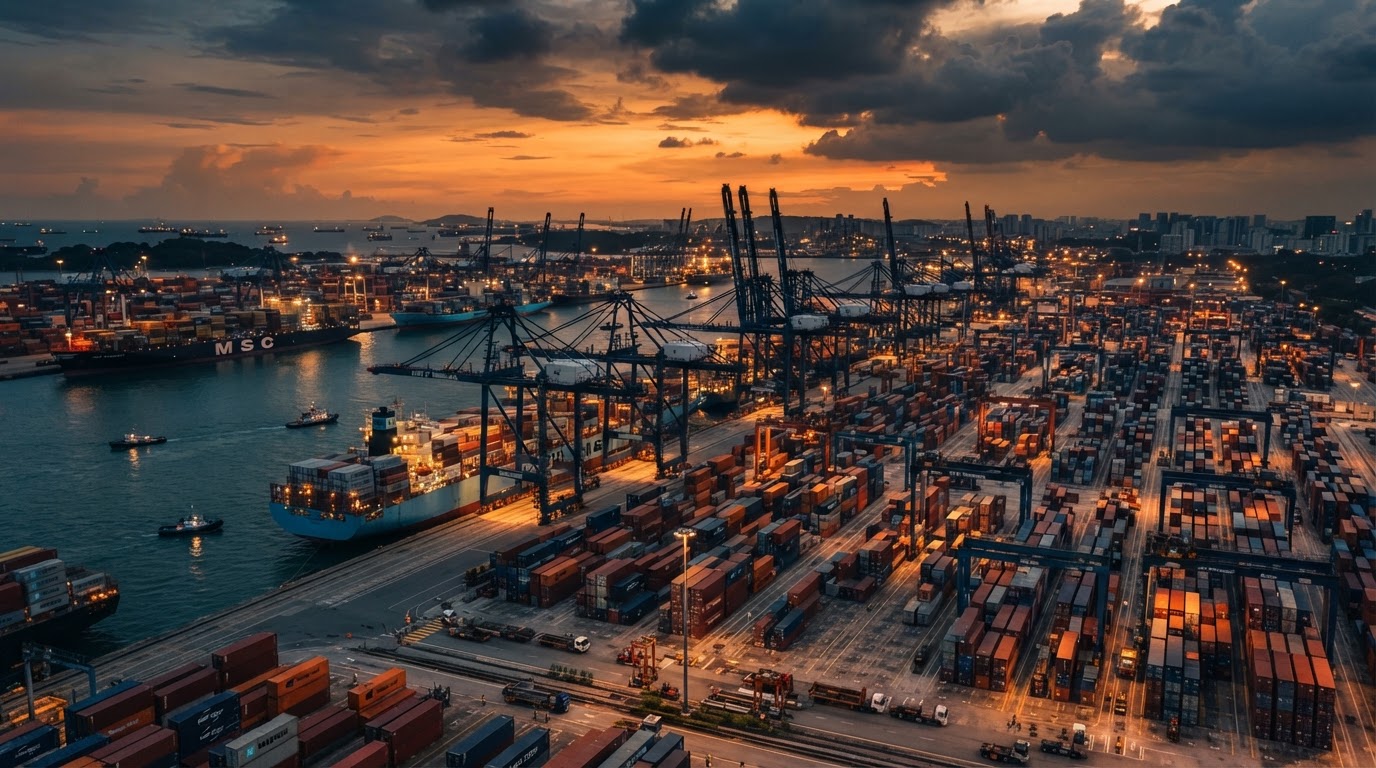
If you've shipped anything globally in the last few years, you've felt it — port congestion, carrier surcharges, shifting de minimis values, and labor volatility. Supply chains aren't 'messed up' by a single cause; they're the result of cascading disruptions hitting an overstretched network.
Consider the compounding effect: when a single port backs up, containers sit longer, demurrage charges accumulate, downstream warehouses receive inventory late, and carriers re-price the next contract cycle to recover their losses. Each disruption is local, but the bill arrives on every shipper's invoice.
The root issue is concentration risk. When too much volume flows through too few nodes — a single port, a single carrier, a single warehouse region — any disruption cascades into weeks of delay and six-figure cost overruns.
What shippers can actually do
The brands weathering disruption best aren't lucky — they're distributed. Splitting inventory across multiple warehouses and regions reduces transit time and creates redundancy when one node slows. If a West Coast port congests, inventory pre-positioned in the Southeast or Midwest keeps orders flowing.
Distribution also cuts cost. Shipping from a single hub to a coast-adjacent customer means long zones, expensive rates, and higher dimensional-weight penalties. Multi-node placement shortens zones, shrinks boxes into lower rate tiers, and removes the surcharges carriers layer onto long-haul packages.
At Next Lane Ship, we help brands distribute inventory across our globally managed network so a disruption in one region doesn't halt your entire operation. That's the difference between a fragile supply chain and a resilient one. Learn how on our warehousing & distribution page.
The role of EDI compliance
Disruption isn't limited to physical freight. Retail partners increasingly enforce EDI compliance — routing guides, mandatory ASN timing, label standards — and non-compliant shipments generate chargebacks that quietly erase margin. A resilient supply chain handles the digital paperwork as rigorously as the physical freight.
We maintain pre-built EDI connections to major retailers so your ASNs, routing, and labeling are compliant by default. See the full list on our B2B & retail EDI fulfillment page.
The takeaway
Supply chains will keep evolving. Tariffs shift, carrier surcharges appear, and port dynamics change. The shippers who win treat fulfillment as a strategic advantage — not a commodity. Build redundancy, distribute inventory, maintain EDI compliance, and partner with a 3PL that has 25+ years of navigating exactly these conditions.
Ready to make your supply chain chaos-proof? Get a custom quote or read more insights from our team.